Financial institution regulations are in constant flux. Finance technology firms may face great difficulties with the new compliance requirements, new reporting and new anti-financial crime regulations. Manual tracking of these developments is inefficient and risk prone to non-compliance.
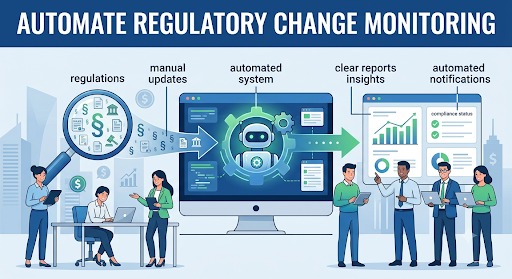
To ensure regulatory compliance as fintech companies grow in scope and scale across various jurisdictions, the automation of regulatory change monitoring has come into practical reality. The advent of modern technology allows organisations to spot changes in regulations, analyse their effect and adjust accordingly in a timely and efficient manner while keeping robust compliance structures in place.
The importance of Regulatory Change Monitoring
Financial regulators frequently put in place new regulations that enhance transparency, better protect the customer, and fight financial crime. Failure to install a critical update can cause downtime, monetary fines, and tarnish reputation.
Compliance teams’ real challenge isn’t just the collection of regulatory data. The true challenge is to know which changes are having an impact on internal processes, customer onboarding, risk assessment and transaction monitoring.
Manual reviews are often challenging for organizations to keep up with the ever increasing amount of regulatory publications. Automated monitoring systems can alleviate this burden by providing relevant information to compliance stakeholders.
The importance of technology in compliance management
High-tech compliance systems employ data aggregation, machine learning and workflow automation to keep a constant watch on regulatory sources. These can be set up to monitor government sites, regulatory announcements, industry publications and enforcement notices in real time.
An automated system can assist fintech companies to:
- Monitor the regulatory developments across various jurisdictions
- Classify changes in terms of risk and business impact.
- Delegate review tasks to pertinent teams
- Keep records for internal control
- Keep Compliance Reporting going.
Compliance professionals can spend more time on strategic decision making than on mundane information gathering.
How to tie Regulatory Monitoring to Financial Crime Compliance
AM rules are often subject to regulatory changes. Amendments to the requirements for customer due diligence, sanctions screening standards and risk assessment methodologies can directly affect compliance operations.
New regulations will require changes to organizations’ aml check, which must continue to meet the expectations set forth in the regulations. Relevant changes can be automatically noticed using the automated monitoring tools and teams responsible for updating the internal procedure can be notified.
This proactive method ensures consistency of compliance, and eliminates the risk of “old” controls in production environments.
To improve Internal Reviews and Governance
Regulatory monitoring should not be stand-alone. Automated data gathered should automatically be shared with governance processes, policy review, and risk management.
Regulatory intelligence is a component of many organisations’ AML audit preparation process. Access to a single version of regulatory changes can help ensure compliance teams are aware, responsive and provide the right protection during review.
Documentation is another area that can be streamlined with automated workflows, as they keep track of regulatory alerts, internal evaluations, and remediation actions. This establishes a clear compliance chain of accountability which assists in the management of accountability throughout the company.
Encourage successful monitoring schemes
It takes more than just the awareness of regulatory changes to be a successful compliance strategy. Organizations need to assess the impact of those changes on the operational controls and risk management procedures.
This is particularly important for AML Monitoring programs. If the regulatory expectations change, the transaction monitoring scenarios and the alert parameters and investigation process can need to be adjusted. Automation plays a role in ensuring these updates are promptly identified and reviewed.
Having regulatory intelligence combined with monitoring systems can enhance responsiveness and reduce manual workload for fintech businesses.
Policy Management and Process Updates
When regulatory changes occur, it’s often necessary to update the internal documentation. It is the responsibility of compliance teams to keep policies, procedures and employee guidance up to date.
If appropriate regulatory changes are identified, the automated monitoring solution can initiate reviews. It enables organisations to keep up to date with their aml policy and exhibit an orderly procedure for compliance governance.
Frequent policy revisions also help employees know about the policy and prevents departmental discrepancies in policy compliance.
Industry-Specific Compliance Considerations
Each industry has specific compliance requirements. The aml checks for estate agents, for instance, could be different from the ones used for a digital banking platform or a payment service provider.
Automated regulatory monitoring can help to filter out updates based on industry relevance, so compliance teams receive only the information that affects their business operations. This personalized strategy helps to decrease information overload and enhance efficiency.
Likewise, companies in the process of creating an Aml audit checklist can leverage on automated tracking systems to collect evidence of regulatory awareness, policy changes, and control improvements all year long.
Conclusion
With regulatory requirements constantly changing, it is important for fintech firms to have effective methods for keeping up to speed and compliant with the current regulations. Automated regulatory change monitoring offers a scalable solution that can help decrease manual workload, enhance governance, and boost compliance operations.
Technology, workflow, and continuous monitoring can help organizations better adapt to regulatory changes. From supporting risk assessments to policy management and compliance reviews, automation contributes to a more robust system for sustained regulatory success.