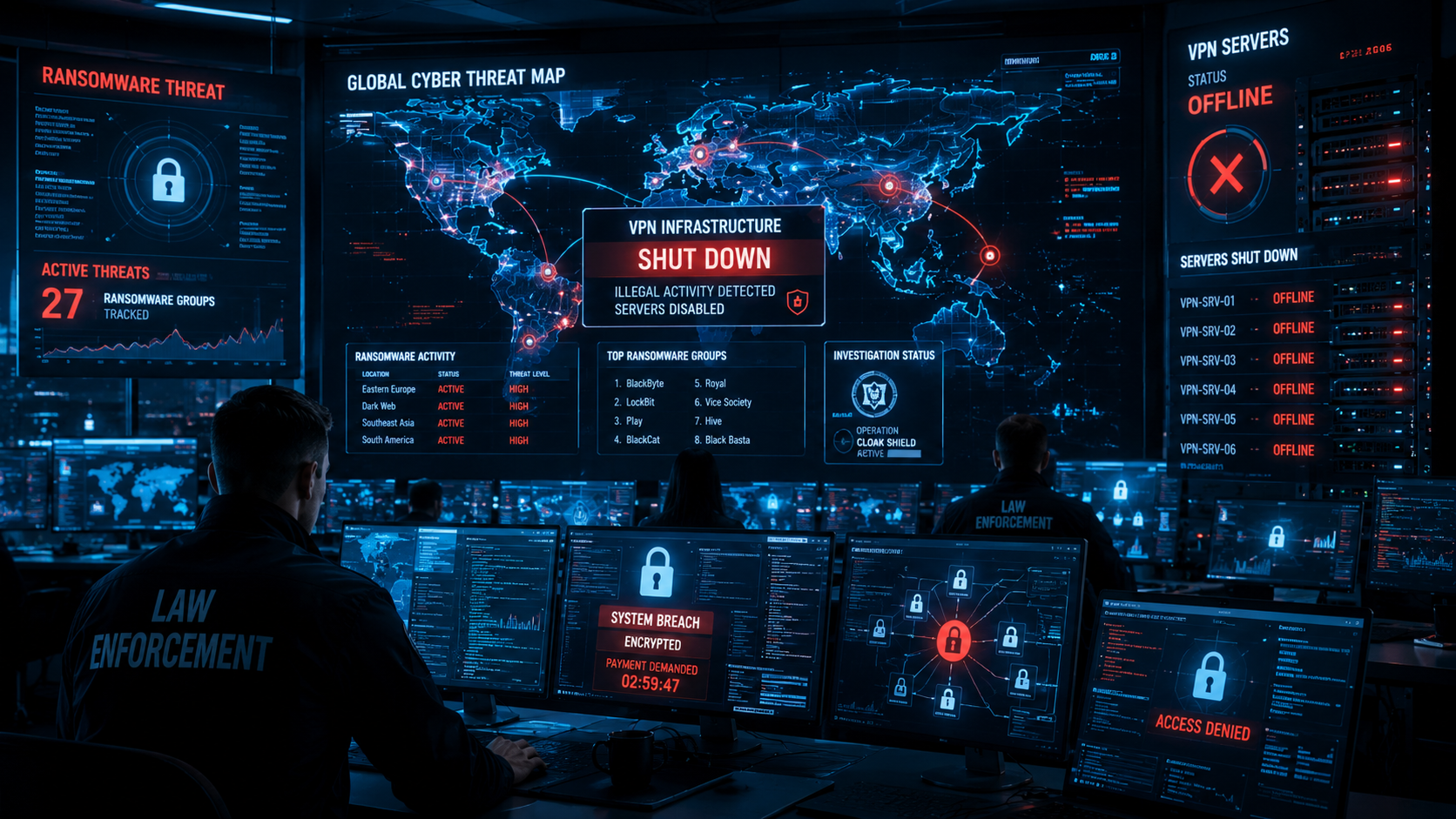
Cybersecurity threats continue to evolve rapidly, and recent international law enforcement action against a VPN service allegedly used by multiple ransomware groups marks another major step in the global fight against cybercrime. According to recent reports, authorities successfully shut down a VPN infrastructure that had reportedly been used by more than two dozen ransomware gangs to hide malicious activity and launch cyberattacks against organizations worldwide.
This operation highlights the growing collaboration between governments, cybersecurity agencies, and technology experts in combating modern digital threats. More importantly, it sends a strong message to cybercriminal networks that law enforcement agencies are becoming increasingly sophisticated in tracking and disrupting ransomware operations.
At Revotrads, we believe this incident also reveals important lessons for businesses, startups, and enterprises regarding cybersecurity preparedness, VPN usage, and digital infrastructure security.
The Growing Threat of Ransomware Attacks
Ransomware has become one of the most dangerous cybersecurity threats facing businesses today. These attacks typically involve cybercriminals encrypting an organization’s data and demanding payment in exchange for restoring access.
Over the past few years, ransomware gangs have targeted:
- Businesses
- Hospitals
- Government agencies
- Educational institutions
- Financial organizations
- Cloud platforms
- Critical infrastructure systems
The financial and operational impact of ransomware attacks can be devastating. In many cases, organizations face:
- Data loss
- Operational downtime
- Reputation damage
- Legal liabilities
- Financial losses
- Customer trust issues
Cybercriminal groups often use advanced infrastructure, including VPN services, encrypted communication channels, and anonymous hosting networks, to hide their activities and avoid detection.
Why the VPN Shutdown Matters
The recent shutdown operation focused on a VPN service reportedly linked to numerous ransomware gangs. According to investigators, the service was allegedly used to mask attacker identities, route malicious traffic, and support cybercrime operations across multiple countries.
VPN services are legitimate cybersecurity tools designed to improve online privacy and secure internet connections. However, like many technologies, they can also be abused by malicious actors for illegal purposes.
The law enforcement action demonstrates several important developments in modern cybersecurity:
1. Global Cybercrime Investigations Are Becoming Stronger
International agencies are increasingly working together to track ransomware infrastructure and disrupt criminal operations across borders.
2. Cybercriminal Infrastructure Is Being Targeted Directly
Rather than only pursuing individual hackers, authorities are now focusing on the infrastructure supporting cybercrime ecosystems.
3. Anonymous Online Operations Are Becoming Harder
Advanced digital forensics, intelligence sharing, and cybersecurity monitoring are improving law enforcement’s ability to identify malicious activity.
This marks a major shift in how governments and agencies approach modern cyber threats.
The Role of VPN Services in Cybersecurity
VPNs, or Virtual Private Networks, are commonly used by businesses and individuals to protect online privacy and secure internet traffic.
Legitimate uses of VPN services include:
- Remote work security
- Data encryption
- Privacy protection
- Secure access to company networks
- Protection on public Wi-Fi networks
However, the same encryption and anonymity features that benefit users can also attract cybercriminals.
This does not mean VPNs are dangerous. Instead, it highlights the importance of choosing trusted VPN providers and implementing strong cybersecurity practices.
Businesses should ensure that VPN usage is combined with:
- Multi-factor authentication (MFA)
- Endpoint security
- Network monitoring
- Access control policies
- Employee cybersecurity training
Security tools alone are not enough without proper governance and monitoring.
What Businesses Can Learn From This Incident
The shutdown of a ransomware-linked VPN infrastructure provides several important lessons for organizations.
1. Cybersecurity Must Be Proactive
Modern cyber threats evolve constantly. Businesses should not wait until an attack occurs before strengthening security measures.
Regular audits, security updates, and monitoring are essential.
2. Infrastructure Visibility Is Critical
Organizations must maintain visibility across their networks, cloud systems, and remote access environments to identify suspicious activity quickly.
3. Remote Work Security Matters More Than Ever
As hybrid and remote work models continue growing, secure remote access solutions are becoming increasingly important.
VPNs should be configured securely and monitored continuously.
4. Cybercrime Is Becoming More Organized
Ransomware gangs now operate like structured organizations with advanced infrastructure, partnerships, and financial operations.
Businesses must prepare for increasingly sophisticated attacks.
The Future of Cybersecurity and Digital Infrastructure
The cybersecurity industry is entering a new phase where collaboration between governments, private companies, and cybersecurity firms is becoming essential.
Emerging technologies such as:
- Artificial intelligence
- Threat intelligence automation
- Behavioral analytics
- Zero-trust security models
- Cloud security platforms
Are helping organizations improve threat detection and response capabilities.
At the same time, ransomware attacks continue evolving rapidly, making cybersecurity investment a top priority for businesses worldwide.
Organizations that fail to modernize their cybersecurity infrastructure may face growing operational and financial risks in the future.
At Revotrads, we believe cybersecurity is no longer only an IT responsibility, it is a business-critical strategy that directly impacts growth, trust, and operational stability.
Final Thoughts
The recent law enforcement operation against a VPN service allegedly used by ransomware gangs represents an important milestone in the global fight against cybercrime.
It demonstrates that authorities are becoming more aggressive and effective in targeting not only individual hackers but also the infrastructure enabling cybercriminal operations.
For businesses, this serves as a reminder that cybersecurity must remain a continuous priority. Secure infrastructure, proactive monitoring, employee awareness, and trusted technology partnerships are now essential components of modern digital operations.
As cyber threats continue evolving, organizations that invest in resilience, visibility, and responsible security practices will be better prepared for the future.
The cybersecurity landscape is changing rapidly, and businesses must evolve with it.