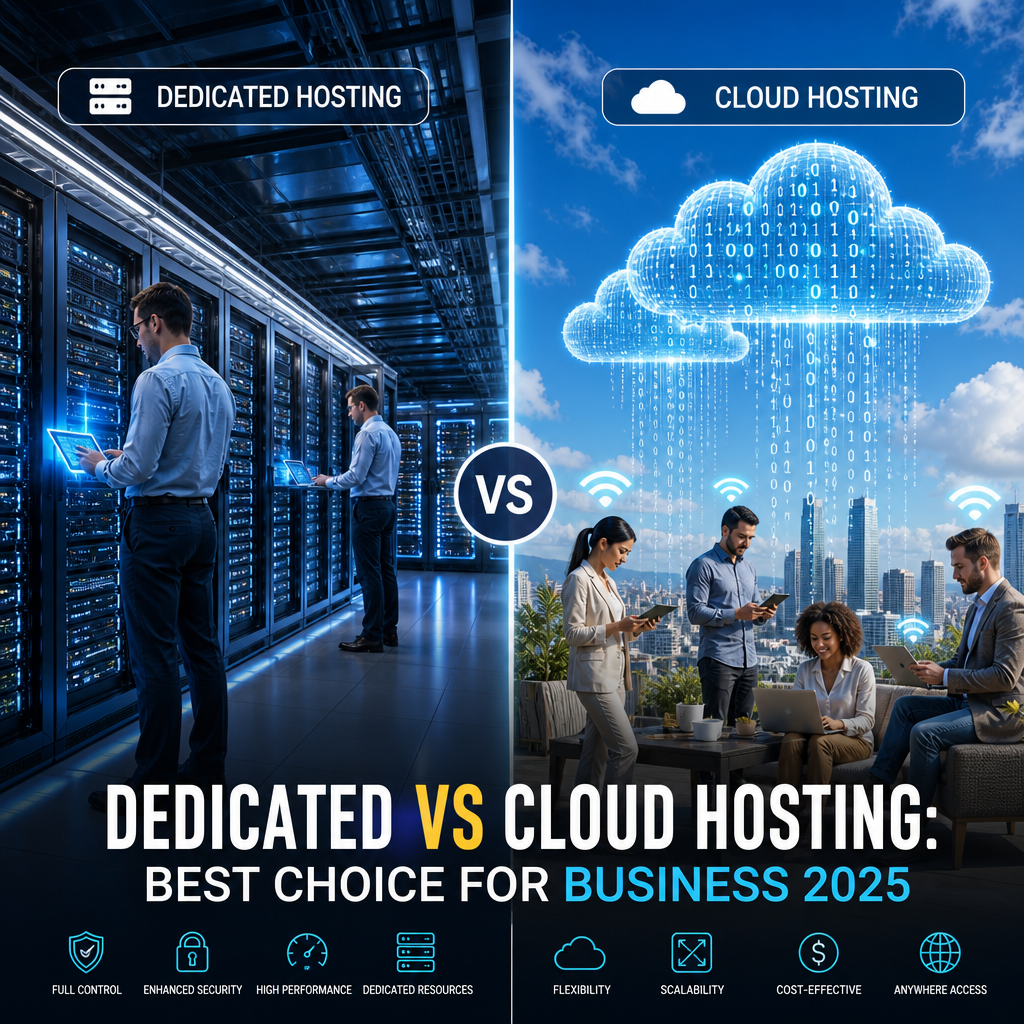
As we approach 2026, the digital landscape continues to evolve at a rapid pace, making it crucial for businesses to select the right hosting solution. The debate between dedicated hosting and cloud hosting remains pertinent as both have unique advantages that can cater to different business needs. In this blog post, we will dive deep into each option to help you make the best decision for your business.
Understanding Dedicated Hosting
Dedicated hosting involves leasing an entire physical server solely for your own use. This means you have complete control over its resources, such as RAM, storage, and CPU. Dedicated hosting is akin to owning a house, it’s all yours with no need to share with anyone else.
Key Benefits of Dedicated Hosting
- Performance and Reliability: With dedicated resources, your website can handle high traffic and complex applications without a hitch.
- Customization: You have the freedom to install and configure software and operating systems that suit your business needs.
- Security: Enhanced security measures and the lack of a shared environment significantly reduce the risk of cyber threats.
- Predictable Expenses: Fixed monthly or annual fees prevent unexpected costs, making budget planning easier.
Who Should Consider Dedicated Hosting?
Dedicated hosting is ideal for large businesses or enterprises that require absolute control over their server environment and need high-security assurance. It is also suitable for resource-intensive applications or peak traffic periods that demand maximum performance.
Exploring Cloud Hosting
Cloud hosting operates on a virtual server and works through a network of interconnected physical servers. This decentralized setup allows for flexible resource allocation, much like living in an apartment within a complex with shared amenities that you can access as needed.
Major Advantages of Cloud Hosting
- Scalability: Easily scale up or down based on your current demands without stressing about physical hardware limitations.
- Cost-Effectiveness: Pay only for the resources you use, helping startups and small businesses manage their budgets more efficiently.
- Redundancy: With data mirrored across multiple data centers, cloud hosting provides greater redundancy and reliability.
- Accessibility: Access your resources from anywhere with an Internet connection, enhancing flexibility for remote teams.
Who Should Opt for Cloud Hosting?
Cloud hosting is perfect for small to medium-sized businesses, startups, or any enterprise looking to avoid significant upfront investments and needing scalable solutions to accommodate growth. It’s particularly beneficial for those with fluctuating traffic demands and remote workforces.
Comparing Costs: Which Provides Better Value?
Dedicated hosting usually involves a higher upfront cost due to the need for purchasing or leasing physical hardware and possibly maintaining it. However, for large-scale operations that require dedicated resources and security, the cost might be justified.
Cloud hosting, being more cost-effective upfront, operates on a pay-as-you-go model, which can be more appealing to businesses with changing needs or limited initial capital.
Security Considerations
In terms of security, dedicated hosting offers robust physical security and control, making it preferable for companies dealing with sensitive data. Cloud hosting offers stringent security measures, utilizing best practices and compliance solutions because of its multi-tenant nature, but these depend heavily on the provider’s protocols.
Making the Decision: Factors to Consider
To determine whether dedicated or cloud hosting is best for your business as you look towards 2026, consider the following:
- Business Scale: Larger businesses with fixed data needs may lean towards dedicated hosting, whereas smaller businesses might benefit more from the flexibility of cloud hosting.
- Growth Potential: If you anticipate rapid growth, the scalable nature of cloud hosting could be more aligned with your needs.
- Budget Constraints: Determine your budget for hosting solutions. Cloud hosting often has lower initial costs compared to dedicated hosting.
- Technical Expertise: Managing dedicated servers might require more technical skills. Cloud hosting can be more user-friendly, with managed options available.
- Security Needs: Assess whether your sector demands stringent data security, which could necessitate dedicated hosting.
Conclusion: Your Hosting Choice for 2026
Ultimately, the right hosting choice depends on your specific business needs, goals, and resources. While dedicated hosting offers enhanced control and performance, cloud hosting provides flexibility, scalability, and cost-effectiveness. Carefully evaluate your current and future needs to make an informed decision that supports your business’s growth and stability. As you plan for 2026, remember that both hosting solutions come with their unique set of features and benefits; it’s all about finding the balance that best aligns with your business objectives.