

In an increasingly privacy-aware world, proxy services have grown from niche tools into essential utilities for bypassing geo-block restrictions, enhancing anonymity, managing multi-account workflows, and even supporting e-commerce or SEO professionals. One such service that’s caught attention is Proxyium. But is it really worth your time (and possibly money)? And more importantly, how does it stack up against alternative providers?
In this deep dive, we’ll review Proxyium’s features, pros and cons, performance, trustworthiness, cost model, and finally present several strong alternatives you should consider. Whether you just want casual anonymity or require serious proxy infrastructure for business tasks, you’ll walk away with a clearer view of whether Proxyium is the right service – and what other options exist.
What Is Proxyium?
Proxyium presents itself as a web-proxy and/or residential proxy service (depending on the version or marketing) that allows users to route browser traffic via its servers, mask IP addresses, access geo-blocked content, and browse with greater privacy. According to its website, Proxyium offers a simple, no-download web interface (in some versions), encryption, and a free tier or free access component for casual use.
Some of Proxyium claimed differentiators:
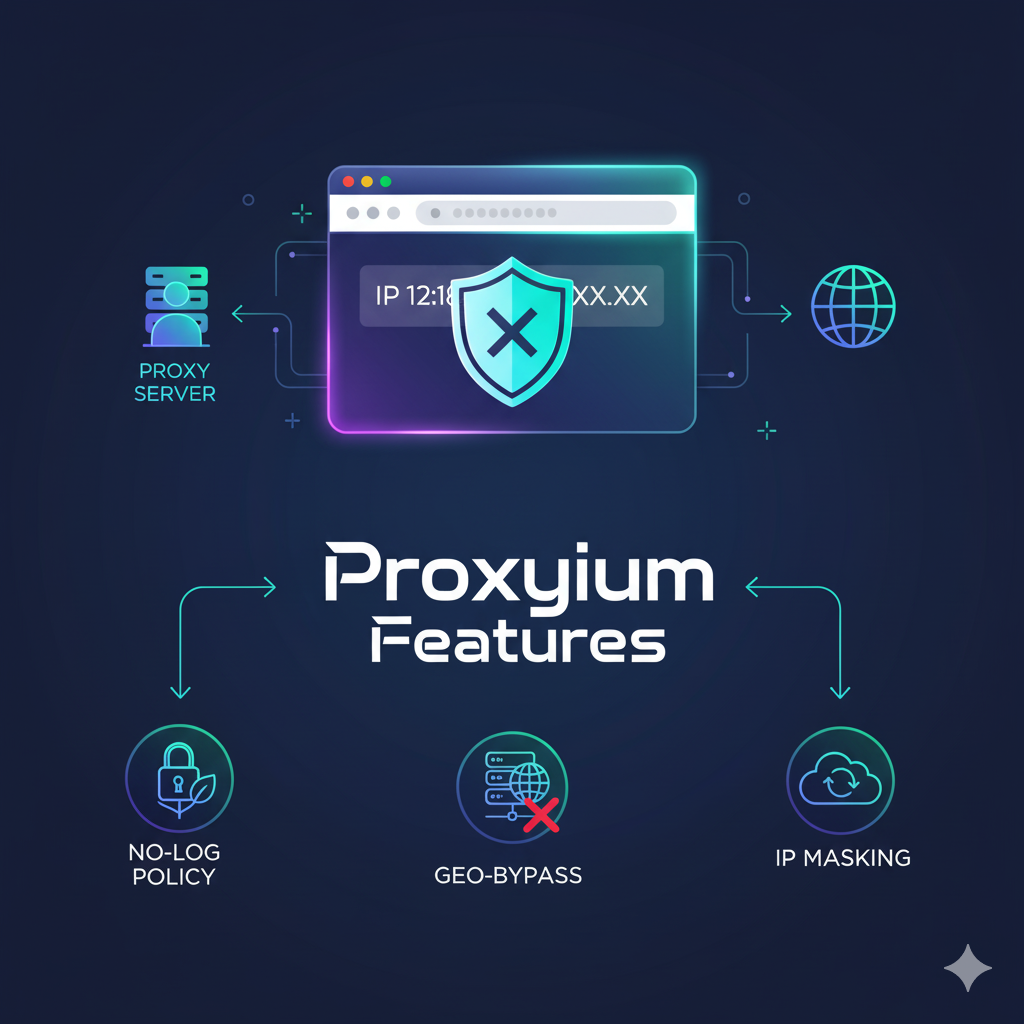
- IP‐address masking to hide your real location.
- “No-log” policy or minimal logging (claims).
- Free web proxy convenience – no install needed.
- Geo-restriction bypass and simplified browser compatibility.
In short: Proxyium aims to give users an easy way to browse somewhat anonymously via a proxy server.
Key Features of Proxyium
Let’s break down what the service offers, and the practical implications.
1. Browser-based Web Proxy (Free Tier)
One version of Proxyium allows you to just open a website, enter a URL, and browse via its proxy-server interface – no installation, no account required (in some instances).
Implication: Very convenient for casual use (e.g., one-off blocked site access), but comes with limitations (speed, logging, protocol support) that we’ll discuss.
2. IP Masking & Anonymity
Proxyium claims to mask your IP address, helping hide your real location from visited websites.
Implication: Useful for avoiding simple IP tracking, but anonymity doesn’t equal full security – it depends on the proxy’s logging, DNS leaks, and usage habits.
3. Encryption & Security Measures
According to the service page, Proxyium uses encryption and some security protocols to protect browsing traffic. (Though exact specs are often unclear).
Implication: A step up from using no proxy, but not necessarily equivalent to a full VPN or enterprise-grade secured proxy.
4. Geo-Restriction Bypass and Device Compatibility
Proxyium claims ease in accessing geo-blocked content and works across browsers/devices.
Implication: Good benefit for casual users or travellers, but services like Netflix may still block proxy traffic; speed & reliability matter.
5. Free Version Limitations
Proxyium’s free version (or free web proxy mode) has limitations: fewer server locations, potential speed caps, limited features compared to paid/residential proxies.
Implication: Free tier may suffice for basic browsing but not for heavy or professional use.
Performance & Reliability: How Does Proxyium Stack Up?
From available third-party reports and user commentary, here’s what we know:
- Some sources report that Proxyium handles “peak usage periods” reasonably well, with minor speed drops.
- However, proxy services in general (especially free/open ones) suffer from instability, IP leaks, malicious behavior or content manipulation. For example, a 2024 academic study found that only ~34% of free proxies were active and many exhibited security issues.
- On trustworthiness: a site reviewing Proxyium gave it a 76% “fair” trust score, flagging its domain age and hidden ownership details.
Summary: Proxyium appears to deliver a reasonably usable service in its niche (free/personal browsing), but may fall short on professional benchmarks – especially around uptime guarantees, advanced protocols, logging transparency, and large-scale performance.
Pros & Cons of Proxyium
Pros
- Very easy to start: free web-proxy mode means no installation or account fuss.
- Convenient for casual access to blocked content or low-risk anonymous browsing.
- IP masking and some security features beyond a plain browser.
- Compatible across devices and browsers with minimal setup.
Cons
- Trust score and domain/ownership transparency appear weaker compared to top-tier proxy networks.
Limited scope: free/web-proxy mode may not cover full device traffic, applications outside browser, gaming or streaming reliably. - Unclear protocol support and logging transparency; claims of no-log policy may need independent audit.
- Free or low-cost tiers may suffer slower speeds, fewer server locations, possible congestion.
- For advanced use-cases (residential proxies, large-scale scraping, business workflows) may lack feature set compared to premium providers.
Use Cases: When Proxyium Makes Sense
If you fall into one of these categories, Proxyium could be a reasonable option:
- You don’t require full device-wide protection, non-browser application use, or enterprise-grade guarantees.
- You just need to access a geo-blocked website or bypass a simple network firewall occasionally.
- You are browsing in a public Wi-Fi scenario and want a lightweight proxy rather than full VPN installation.
- You are a casual user who values anonymity for browsing and want something very low-commitment (free or minimal cost).
When You Should Consider Alternatives
You might want to look elsewhere if:
- You value strong transparency, audits, uptime guarantees and business-grade service.
- You need mobile/residential proxies, API integration, large IP pools, rotation control, or detailed geolocation targeting.
- You’re doing data-scraping, SEO monitoring, ad verification, multi-account management at scale.
- You require fully device-wide encryption or support for non-browser traffic (VPN-style).
Best Alternatives to Proxyium in 2025
Here are a handful of strong alternative proxy services to consider, depending on your use case:
1. Bright Data – Top-tier residential + mobile proxy network, massive IP pool, enterprise use, high cost but high feature set.
2. Oxylabs – Another premium provider with strong global footprint, high reliability, geared for scraping/data-research.
3. Smartproxy – More affordable than the top two, friendly to SMEs, with good performance for moderate tasks.
4. Storm Proxies – Budget friendly, simpler setup, good for smaller scale tasks or individual use.
5. IPRoyal – Emerging mid-market provider with decent pricing and flexibility.
Each alternative offers a different mix of IP types (residential, mobile, data center), protocol support (HTTP/S, SOCKS5), rotation policies, and cost models. Your choice should match your specific needs.
How to Choose the Right Proxy Service (Checklist)
- Purpose & volume: Are you browsing casually, streaming, scraping, managing many accounts, or doing market research?
- IP types: Data center proxies are cheaper but more easily flagged; residential or mobile IPs cost more but have better stealth.
- Protocol support: Do you need SOCKS5, HTTP/S, or also non-browser traffic?
- Rotation & session control: Will you reuse the same IP OR rotate per request?
- Location & geo-targeting: Do you need specific country/city IPs?
- Speed & latency: High-volume tasks demand stable, low-latency proxies.
- Logging & privacy policy: Check audit reports, jurisdiction, data retention policies.
- Support & SLA: For business use, you might need guaranteed uptime, dedicated account managers, strong customer support.
- Cost vs scale: What’s your budget? Many low-cost proxies perform poorly under high usage.
- Trial & testing: Always test proxies with your intended workflow before committing.
Verdict: Proxyium – Is It Worth It?
If I were to summarise: Yes – Proxyium is worth considering if your usage is light, casual, and you want a fast way to access blocked content or browse with greater anonymity. Its ease of use and free/low-cost entry point are its biggest strengths.
However, for serious or business-level tasks – heavy scraping, residential IPs, large-scale account management, or full-device encryption – you’ll likely find the alternative providers offer stronger, more robust solutions. The free proxy niche is inherently riskier (as the academic studies show) and limitations (speed, locations, logs) become more noticeable.
In short: Use Proxyium for casual privacy, but if you’re going deeper, budget for a dedicated proxy provider or premium plan.
Proxyium FAQs
Is Proxyium free to use?
Yes, Proxyium provides a free web-proxy mode with no account required for casual use. Advanced features or dedicated/residential proxy tiers may cost.
Can I use Proxyium for streaming geo-blocked content?
Possibly – Proxyium claims geo-bypass support and some tests show smooth streaming for 720p/1080p. However, many streaming platforms actively block proxies, so results may vary.
Is Proxyium safe and private?
Proxyium claims a no-log policy and IP masking, but some trust checks rate its website as “fair” with hidden ownership and relatively new domain. If you need enterprise-grade privacy, you may want to choose a provider with audited no-logs and business contracts.
What proxy type is Proxyium? Residential or datacenter?
Proxyium’s free web-proxy mode looks more like a typical HTTP/S web proxy. It may not provide large residential IP pools or advanced datacenter/rotating proxy features found in premium services.
What are good alternatives to Proxyium?
Providers such as Bright Data, Oxylabs, Smartproxy, Storm Proxies, IPRoyal are well-regarded in 2025 and offer different tiers of features, IP pools, protocols and price points.
Conclusion
Proxyium occupies an interesting space in the proxy ecosystem: highly accessible for casual or one – off use, but less suited to the heavy-duty demands of business-grade proxy infrastructure. If your needs are light – browsing, geo-bypass, anonymity – it deserves a spot in your toolkit. But as your use case grows more demanding – multiple accounts, scraping, high-volume data, brand protection – consider upgrading to one of the stronger alternatives laid out above.
Choose your proxy service based on intent, scale and budget – not just brand name or lowest cost. After all, a proxy is only as good as the network behind it, the transparency of the provider, and how well it fits your workflow.
Here’s to safer, smarter, and more efficient browsing in 2025!



2 Responses
keep up the fantastic piece of work, I read few content on this internet site and I conceive that your web blog is rattling interesting and has bands of great info .
good review of proxyium and others. for something quick and no-install, i find a free web proxy like proxyorb is pretty decent for basic stuff.