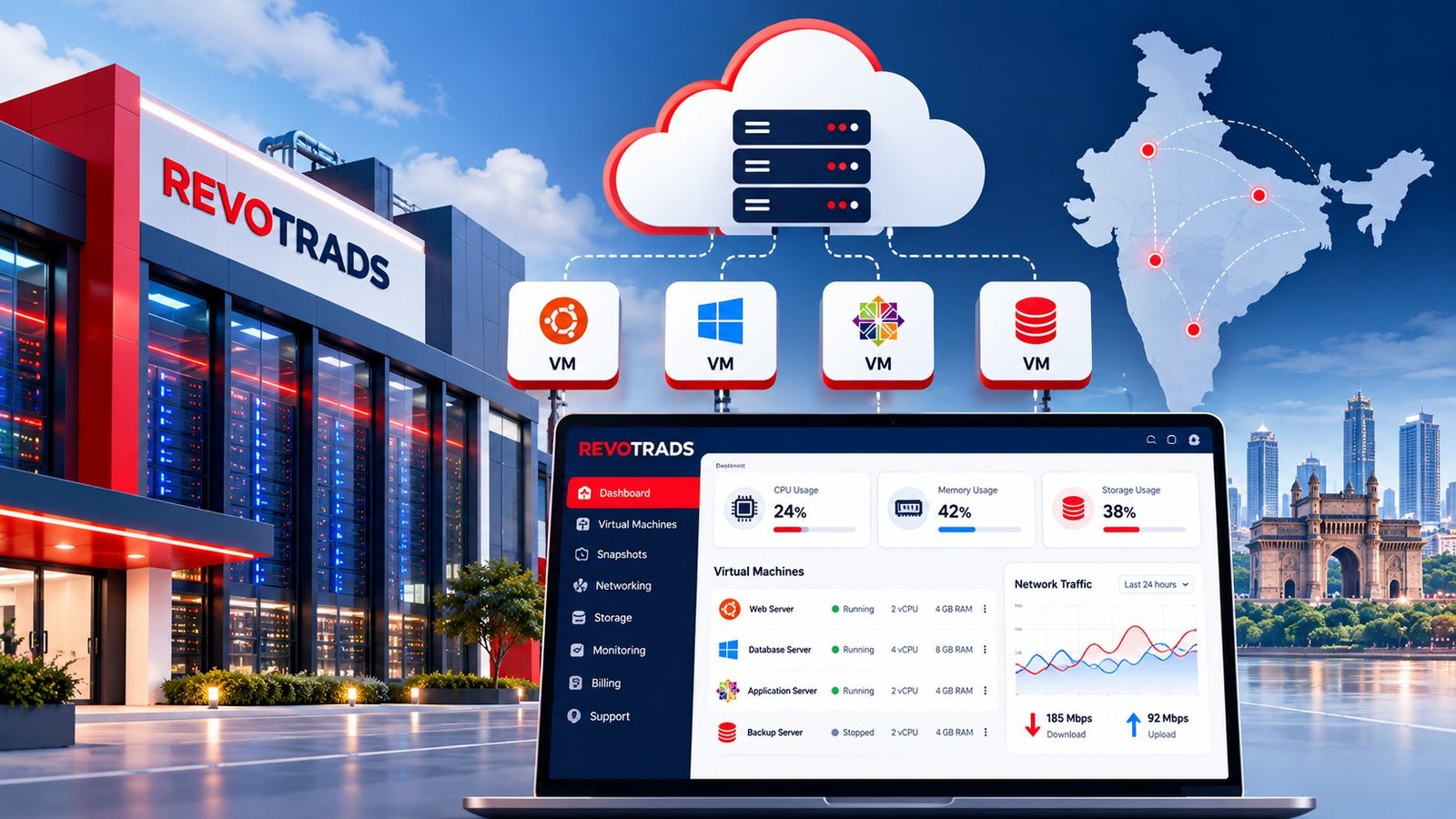
The digital infrastructure landscape has undergone a seismic shift over the past decade, and as we navigate through 2026, one truth has become unmistakably clear: cloud hosting is no longer merely an alternative to traditional on-premise servers, it is the definitive foundation upon which modern businesses are built. What began as a convenient option for startups and tech companies has matured into an indispensable ecosystem that powers everything from global enterprises to local brick-and-mortar stores transitioning into the digital realm. In 2026, cloud hosting services represent not just technological preference, but strategic imperative.
To understand why cloud hosting dominates the conversation, consider how it stacks against legacy alternatives across the dimensions that matter most to business leaders today:
| Parameter | Cloud Hosting | Traditional Dedicated Hosting | On-Premise Infrastructure |
|---|---|---|---|
| Initial Investment | Minimal to zero; pay-as-you-go model | Moderate; fixed monthly/annual fees | Very high; hardware, real estate, cooling, power setup |
| Scalability | Instant auto-scaling up or down based on demand | Manual upgrade; limited by physical server capacity | Slow; requires procurement and physical installation |
| Performance & Latency | Global edge nodes; sub-20ms latency via CDN | Dependent on single data center location | Limited to local network; requires CDN add-on |
| Security & Compliance | Enterprise-grade zero-trust, automated threat detection, built-in compliance (GDPR, HIPAA, SOC 2) | Basic security; compliance add-ons at extra cost | Full responsibility on organization; requires dedicated security team |
| AI & Advanced Compute | Native AI/ML instances, GPU clusters, serverless inference | Not available; requires custom integration | Extremely expensive to build and maintain |
| Maintenance & Updates | Fully managed by provider; automatic patches | Semi-managed; user responsible for OS/software updates | Fully internal; requires dedicated IT staff |
| Disaster Recovery | Built-in multi-region redundancy; near-zero RTO/RPO | Backup options available at additional cost | Complex and costly; requires duplicate infrastructure |
| Sustainability | Carbon-neutral/negative operations; 60–80% lower carbon footprint | Moderate; dependent on data center provider | High energy consumption; low server utilization |
| Developer Velocity | Serverless deployment, Infrastructure-as-Code, CI/CD native | Limited tooling; manual provisioning | Slowest; heavy operational overhead |
| Uptime Guarantee | 99.99% – 99.999% SLA standard | 99.9% – 99.95% | Dependent on internal capability; typically lower |
| Best Suited For | Startups, SMBs, enterprises, AI-driven apps, global services | Mid-sized businesses with stable, predictable traffic | Highly regulated industries with strict data sovereignty |
| Time to Deploy | Minutes to hours | Days to weeks | Weeks to months |
As the comparison makes evident, cloud hosting outperforms legacy infrastructure across nearly every measurable parameter. But the advantages extend far beyond this high-level overview.
The Economics of Elasticity
Perhaps the most compelling argument for cloud hosting in 2026 remains its unparalleled economic model. Traditional server infrastructure demands massive capital expenditure upfront, ardware procurement, data center leasing, cooling systems, and dedicated IT personnel create a financial burden that can cripple emerging businesses. Cloud hosting, by contrast, operates on an operational expenditure model where organizations pay only for the resources they consume.
This pay-as-you-go structure has evolved significantly by 2026. Advanced auto-scaling algorithms now predict traffic patterns with remarkable accuracy, automatically provisioning resources during peak periods and scaling down during lulls. For e-commerce platforms experiencing holiday surges, media companies broadcasting viral content, or SaaS applications onboarding enterprise clients, this elasticity translates directly to cost optimization. Businesses no longer over-provision “just in case” or suffer outages during unexpected spikes.
The financial impact is substantial. Consider the following breakdown for a typical mid-sized business over a three-year period:
| Cost Category | On-Premise Infrastructure | Traditional Dedicated Hosting | Cloud Hosting (2026) | Cloud Savings vs. On-Premise |
|---|---|---|---|---|
| Initial Capital Expenditure (CapEx) | ||||
| Servers & Hardware | \$85,000 | \$0 | \$0 | \$85,000 |
| Data Center / Rack Space Setup | \$45,000 | \$0 | \$0 | \$45,000 |
| Networking Equipment | \$25,000 | \$0 | \$0 | \$25,000 |
| Total Year 0 Upfront | \$155,000 | \$0 | \$0 | \$155,000 |
| Operational Expenditure (OpEx) — Annual | ||||
| Compute & Server Resources | \$18,000 (power, maintenance) | \$24,000 (dedicated servers) | \$14,400 (auto-scaled instances) | \$3,600 |
| Storage (10 TB usable) | \$12,000 | \$8,400 | \$4,800 | \$7,200 |
| Bandwidth / Data Transfer | \$9,600 | \$6,000 | \$3,600 (generous free tiers included) | \$6,000 |
| IT Personnel (Administration) | \$95,000 (2 FTEs) | \$48,000 (0.5 FTE for coordination) | \$28,000 (0.25 FTE for cloud management) | \$67,000 |
| Security & Compliance Tools | \$18,000 (licenses, audits) | \$12,000 | \$4,800 (included in platform) | \$13,200 |
| Backup & Disaster Recovery | \$14,400 (secondary site, tapes) | \$7,200 | \$2,400 (automated snapshots) | \$12,000 |
| Software Licenses (OS, DB, Monitoring) | \$16,800 | \$10,800 | \$6,000 (open-source or managed) | \$10,800 |
| Cooling & Physical Security | \$8,400 | Included in hosting fee | Included in platform | \$8,400 |
| Total Annual OpEx | \$192,200 | \$116,400 | \$64,000 | \$128,200 |
| 3-Year Total Cost of Ownership (TCO) | ||||
| Year 1 (CapEx + OpEx) | \$347,200 | \$116,400 | \$64,000 | \$283,200 |
| Year 2 (OpEx only) | \$192,200 | \$116,400 | \$64,000 | \$128,200 |
| Year 3 (OpEx only) | \$192,200 | \$116,400 | \$64,000 | \$128,200 |
| 3-Year TCO | \$731,600 | \$349,200 | \$192,000 | \$539,600 |
| Additional Cloud Value (Not Quantified Above) | ||||
| Auto-scaling during traffic spikes | Manual; risk of downtime | Limited; upgrade delays | Instant; zero downtime | Risk avoidance |
| Global CDN / Edge performance | Not included | Add-on cost | Often included | Speed & UX |
| AI/ML compute access | Not available | Not available | On-demand GPU/TPU | Innovation enablement |
| Security & compliance certifications | Self-managed | Partial | Built-in | Audit readiness |
With a 3-year TCO of just $192,000 compared to $731,600 for on-premise infrastructure, cloud hosting delivers savings exceeding $539,600, capital that businesses can redirect toward innovation, talent acquisition, or market expansion. It is no surprise that 78% of enterprises now identify cloud cost optimization as their top infrastructure priority in 2026.
AI-Native Infrastructure
By 2026, artificial intelligence has moved from being a cloud-hosted application to becoming an integral component of cloud infrastructure itself. Modern cloud hodting providers offer AI-optimized compute instances, specialized tensor processing units, and machine learning pipelines that are natively integrated into their hosting ecosystems. This symbiotic relationship between cloud and AI creates capabilities that were science fiction merely five years ago.
Businesses leveraging cloud hosting in 2026 gain access to intelligent resource management systems that optimize performance in real-time. Predictive maintenance algorithms identify potential hardware failures before they occur, automatically migrating workloads to healthy nodes. Natural language interfaces allow non-technical staff to deploy complex infrastructure through conversational commands. For organizations building AI-powered products, whether generative AI applications, computer vision systems, or predictive analytics platforms, cloud hosting provides the specialized GPU clusters and high-throughput networking essential for training and inference at scale.
With so many providers competing in this space, choosing the right platform depends on your organization’s specific needs, geography, and budget:
| Provider | Best For | AI/ML Integration | Edge & CDN | Security Focus | Pricing Model | Green Commitment | Key 2026 Differentiator |
|---|---|---|---|---|---|---|---|
| Amazon Web Services (AWS) | Enterprises, complex workloads, startups | Bedrock AI, SageMaker, Trainium chips | 450+ edge locations; CloudFront | Shield Advanced, GuardDuty, zero-trust architecture | Pay-as-you-go, reserved instances, savings plans | 100% renewable by 2025; water-positive by 2030 | Largest service catalog; deepest enterprise integration |
| Microsoft Azure | Hybrid cloud, enterprise Microsoft ecosystems | Copilot integration, Azure OpenAI Service, AI Studio | 200+ edge zones; Azure Front Door | Sentinel SIEM, Defender for Cloud, Entra ID | Pay-as-you-go, hybrid benefits, enterprise agreements | Carbon negative by 2030 | Seamless Windows/Office 365 integration; strongest hybrid cloud |
| Google Cloud Platform (GCP) | Data analytics, AI-first startups, containerized apps | Vertex AI, Gemini, TPUs v5 | 200+ CDN edge points; Global Load Balancer | Chronicle Security, Mandiant threat intel | Sustained use discounts, committed use contracts | 24/7 carbon-free energy by 2030 | Best-in-class data analytics and Kubernetes (GKE) |
| Net2Secure | SMBs, Indian market, security-conscious businesses, cost-sensitive deployments | AI-powered threat detection, automated compliance scanning | 15+ Indian edge nodes; expanding APAC | Core focus: DDoS protection, WAF, malware scanning, ISO 27001, RBI compliance | Highly competitive flat-rate pricing; no hidden egress fees | Green data centers in India; renewable energy partnerships | “Security-first” architecture at SMB-friendly prices; localized Indian compliance |
| Oracle Cloud | Database-heavy workloads, enterprise ERP | Oracle Cloud AI, HeatWave ML | Limited edge presence | Cloud Guard, Data Safe | Universal credits, BYOL (Bring Your Own License) | Renewable energy goals by 2025 | Best Oracle database performance; aggressive pricing |
| DigitalOcean (Akamai) | Developers, simple apps, SMBs | Limited; third-party AI integrations | Via Akamai Intelligent Edge | Cloud Firewalls, DDoS protection | Simple, predictable monthly pricing | Carbon neutral operations | Easiest-to-use interface; transparent pricing |
| Hetzner | European market, budget hosting, bare metal | Minimal native AI | Basic CDN via partners | Standard DDoS, firewalls | Extremely low-cost; no egress fees | Wind and hydro-powered German data centers | Best price-to-performance ratio in Europe |
| Alibaba Cloud | Asia-Pacific, e-commerce, Chinese market | PAI (Platform of Artificial Intelligence) | 2,800+ global CDN nodes | Anti-DDoS, WAF, data encryption | Pay-as-you-go, subscription, resource packages | Carbon neutrality by 2030 | Dominant in APAC; strong e-commerce integrations |
Notably, Net2Secure has carved out a distinct position in 2026 as the go-to provider for security-conscious SMBs and businesses operating in the Indian subcontinent. With 15+ edge nodes across India, flat-rate pricing that eliminates surprise egress fees, and a security-first architecture featuring AI-powered threat detection and RBI compliance, Net2Secure demonstrates that enterprise-grade protection need not come with enterprise-grade price tags. For organizations prioritizing localized compliance and budget predictability, it represents a compelling alternative to hyperscale giants.
Security Architecture for a Threat-Rich Era
Cybersecurity concerns have only intensified as digital transformation accelerates, and 2026 presents a threat landscape characterized by sophisticated ransomware, supply chain attacks, and AI-powered social engineering. In this environment, cloud hosting providers have invested billions into security infrastructure that individual organizations simply cannot replicate independently.
Leading cloud platforms now offer zero-trust architectures by default, with every access request verified regardless of origin. Hardware security modules, encryption at rest and in transit, and automated threat detection systems come standard rather than as expensive add-ons. Compliance certifications spanning GDPR, HIPAA, SOC 2, and emerging 2026 regulatory frameworks are maintained centrally by providers, relieving businesses of the burden of continuous audit preparation.
Moreover, the shared responsibility model has matured. Cloud providers secure the infrastructure while offering sophisticated tools—automated vulnerability scanning, identity and access management systems, and security information and event management (SIEM) integration, that empower customers to secure their applications effectively. For small and medium businesses without dedicated security teams, this democratization of enterprise-grade protection is transformative.
Edge Computing and Global Performance
The proliferation of Internet of Things (IoT) devices, autonomous systems, augmented reality applications, and real-time gaming has created insatiable demand for low-latency computing. By 2026, cloud hosting has evolved beyond centralized data centers to embrace sophisticated edge computing architectures. Content delivery networks have transformed into full-fledged edge computing platforms, processing data geographically close to end users rather than routing everything to distant servers.
This evolution means that cloud-hosted applications in 2026 deliver performance that rivals or exceeds on-premise solutions. A user in Mumbai accessing a cloud-hosted application might be served from an edge node in Bangalore with sub-20 millisecond latency. Manufacturing facilities leveraging industrial IoT process sensor data at the edge before transmitting insights to central cloud analytics platforms. Autonomous vehicles communicate with roadside edge infrastructure for split-second decision-making. Cloud hosting in 2026 is not just about storage and compute in distant data centers, it is about distributed intelligence across a global mesh of interconnected nodes.
Sustainability as Competitive Advantage
Environmental consciousness has transitioned from corporate social responsibility checkbox to board-level strategic priority, and cloud hosting plays a pivotal role in organizational sustainability goals. Hyperscale cloud providers have made aggressive commitments to renewable energy, and by 2026, many operate carbon-neutral or carbon-negative infrastructures.
The efficiency gains are substantial. Cloud data centers leverage advanced cooling technologies, AI-optimized energy distribution, and server utilization rates far exceeding traditional enterprise data centers. When a business migrates workloads to the cloud, it typically reduces its carbon footprint associated with IT infrastructure by 60-80%. For companies facing increasing pressure from regulators, investors, and consumers to demonstrate environmental responsibility, cloud hosting provides a tangible path to sustainability without compromising performance.
Business Continuity in an Uncertain World
The years leading to 2026 have demonstrated the volatility of global supply chains, the reality of climate-related disruptions, and the necessity of remote work capabilities. Cloud hosting offers inherent resilience that physical infrastructure cannot match. Geographic redundancy comes standard, data is automatically replicated across multiple availability zones and regions. If a natural disaster impacts a data center in Northern Virginia, traffic fails over seamlessly to Ohio or Oregon within seconds.
Disaster recovery, once an expensive and complex undertaking requiring duplicate hardware and elaborate failover procedures, has been simplified through cloud-native backup and recovery solutions. Businesses can achieve recovery point objectives measured in seconds and recovery time objectives approaching zero. In an era where downtime costs average thousands of dollars per minute, this resilience is not merely convenient, it is existential.
The Hybrid and Multi-Cloud Reality
While public cloud adoption continues to accelerate, 2026 has also seen the maturation of hybrid and multi-cloud strategies. Organizations are no longer choosing between cloud and on-premise; they are orchestrating workloads across environments based on specific requirements. Sensitive data might remain in private cloud instances or on-premise servers while customer-facing applications leverage public cloud scalability.
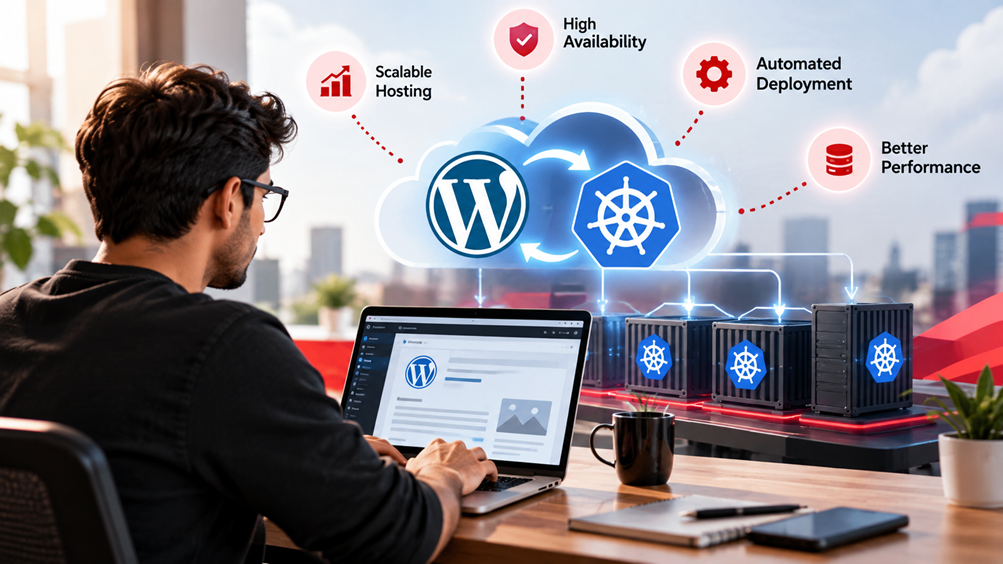
Cloud hosting providers have responded by offering seamless hybrid cloud solutions, consistent management interfaces, unified security policies, and smooth workload portability between environments. Containerization and Kubernetes have become universal standards, preventing vendor lock-in and enabling true multi-cloud architectures. This flexibility means businesses can optimize for cost, performance, and compliance without being beholden to any single provider.
Developer Velocity and Innovation
In 2026, the competitive advantage belongs to organizations that can iterate rapidly, and cloud hosting accelerates development cycles dramatically. Serverless computing has matured to the point where developers deploy code without considering infrastructure at all. Platform-as-a-Service offerings handle database management, authentication, and message queuing automatically. Infrastructure-as-Code practices enable teams to provision entire environments through version-controlled configuration files.
This abstraction layer allows engineering talent to focus on building differentiated products rather than managing servers. Startups can launch minimum viable products in days rather than months. Enterprise teams can experiment with new features through easy-to-deploy sandbox environments. The cloud has become the ultimate enabler of innovation velocity.
Conclusion
As we progress through 2026, cloud hosting services have transcended their origins as simple server rentals to become comprehensive platforms for digital transformation. The convergence of economic efficiency, AI integration, robust security, edge computing capabilities, environmental sustainability, and operational resilience creates a value proposition that traditional infrastructure simply cannot match.
For businesses contemplating their technology strategy, the question is no longer whether to adopt cloud hosting, but how quickly they can migrate and how effectively they can leverage the advanced capabilities now available. Whether you choose a hyperscale leader like AWS, Azure, or GCP, or a specialized provider like Net2Secure that aligns with your regional and budgetary needs, the cloud offers a pathway to competitiveness that legacy infrastructure simply cannot replicate.
In an era defined by rapid change, global connectivity, and technological disruption, cloud hosting services represent the most intelligent, adaptable, and future-proof foundation upon which to build. The bet on cloud is not just the best bet for 2026, it is the only bet that ensures relevance in the decades to come.