In today’s fast-evolving digital landscape, VPS hosting (Virtual Private Server) is one of the most ideal options available in the web hosting domain. It offers you the unique attributes and flexibility of a dedicated server – but at a fraction of the cost.
With VPS hosting, you gain extensive control over your account, the ability to install custom applications, and improved performance compared to shared hosting. However, to fully benefit from these advantages, it’s crucial to find a technically competent hosting provider with proven experience in this domain.
Why Choosing the Right VPS Host Matters
Your hosting provider plays a direct role in your website’s speed, uptime, data security, and scalability. According to a 2025 Hosting Industry Report by Statista:
73% of small businesses rely on VPS or cloud hosting for their main website.
A 1-second delay in page load time can reduce conversions by up to 7%.
Nearly 60% of downtime incidents occur due to poor server management or oversold shared environments.
Hence, selecting the right host for your server is an imperative business decision. Below are the essential factors to evaluate before finalizing your VPS hosting provider.
Security Provision
When choosing VPS hosting for your business, it is vital to ensure that your host provides robust security measures.
Your provider should have firewalls, DDoS protection, intrusion detection systems, and SSL certificates in place. Even if you don’t plan to install an SSL immediately, choosing a host that includes one ensures your data is transmitted securely.
Pro Tip: A VPS with built-in DDoS protection and 24/7 monitoring can reduce cyberattack risks by up to 80%.
This guarantees that your critical data remains safe in a secure environment, minimizing risks of breaches or downtime.
Web Space Management
As your business grows, your data storage and web space requirements will expand too. Hence, it’s crucial to select a host that allows seamless scalability – enabling you to upgrade resources (RAM, storage, or CPU) without downtime or configuration loss.
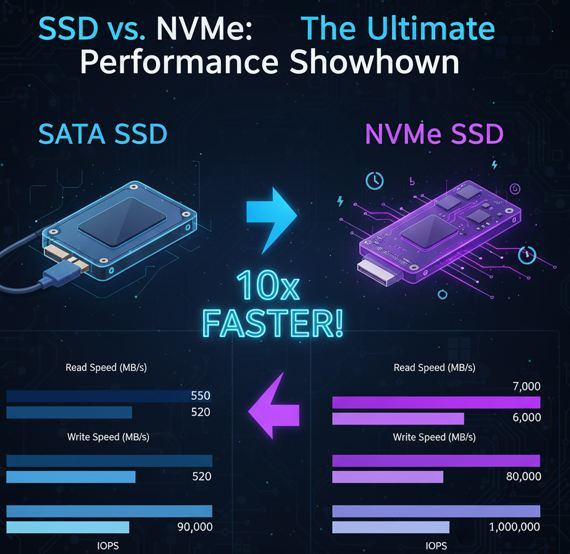
When evaluating hosting performance, it’s essential to understand SSD vs NVMe – while SSDs already offer high-speed performance compared to traditional HDDs, NVMe drives provide up to 5x faster data access, reducing latency and dramatically improving your server’s responsiveness.
Hosting Factor
What to Look For
Recommended Standard (2025)
Storage Type
SSD or NVMe Storage
NVMe preferred (5x faster than HDD)
Scalability
Instant resource upgrades
Within 1–2 minutes
Downtime during upgrade
Should be zero
Yes
Backup options
Daily/weekly backup
Automated & offsite backup
Flexible VPS solutions mean your customers will have uninterrupted access to your website even during upgrades – ensuring reliability and professionalism.
FTP Access and Managed Hosting
If you’ve decided to proceed with VPS hosting, avoid any host that doesn’t offer FTP access or only allows you to edit via website builder tools.
FTP (File Transfer Protocol) is crucial for website management, backups, and code updates.
Additionally, consider opting for a Managed VPS Hosting solution. Although it may cost a little more, it’s ideal for users who lack the time or technical skills to manage their own server.
Managed hosting providers take care of:
Server monitoring
Software updates
Security patching
Technical support
This allows you to focus on your core business while your hosting partner ensures optimal performance.
Bandwidth Speed
Bandwidth determines how quickly data transfers between your website and its visitors. Many hosting vendors set bandwidth limits on VPS accounts, and exceeding these can lead to throttling or downtime.
Be cautious of “unlimited bandwidth” claims – often, these come with hidden restrictions.
Your VPS provider should allow you to scale bandwidth as your traffic grows and maintain consistent speed during traffic spikes.
Stat Insight: A website hosted on a VPS with 1 Gbps bandwidth can handle up to 10,000 concurrent users without lag – a significant advantage for growing eCommerce sites or SaaS platforms.
Reliability and Uptime
Finally, choose a reliable and stable VPS hosting service provider that guarantees at least 99.95% uptime.
A competent provider should also maintain redundant data centers, power backups, and strong SLAs (Service Level Agreements). These factors ensure maximum website performance even during unforeseen disruptions.
Hosting Uptime Tier
Uptime %
Expected Downtime per Year
Tier I
99.671%
~28 hours
Tier II
99.741%
~23 hours
Tier III
99.982%
~1.6 hours
Tier IV (Recommended)
99.995%
~26 minutes
Final Thoughts
To sum up, VPS hosting offers a perfect balance between affordability, flexibility, and control. But to make the most of it, you need a technically competent hosting provider who ensures:
Strong security provisions,
Easy resource scalability,
Full FTP access and management support,
Reliable bandwidth and uptime,
And prompt, expert technical assistance.
Ultimately, a professional, performance-oriented VPS hosting partner will empower your business with speed, stability, and scalability – ensuring that your website stays fast, secure, and online 24/7.