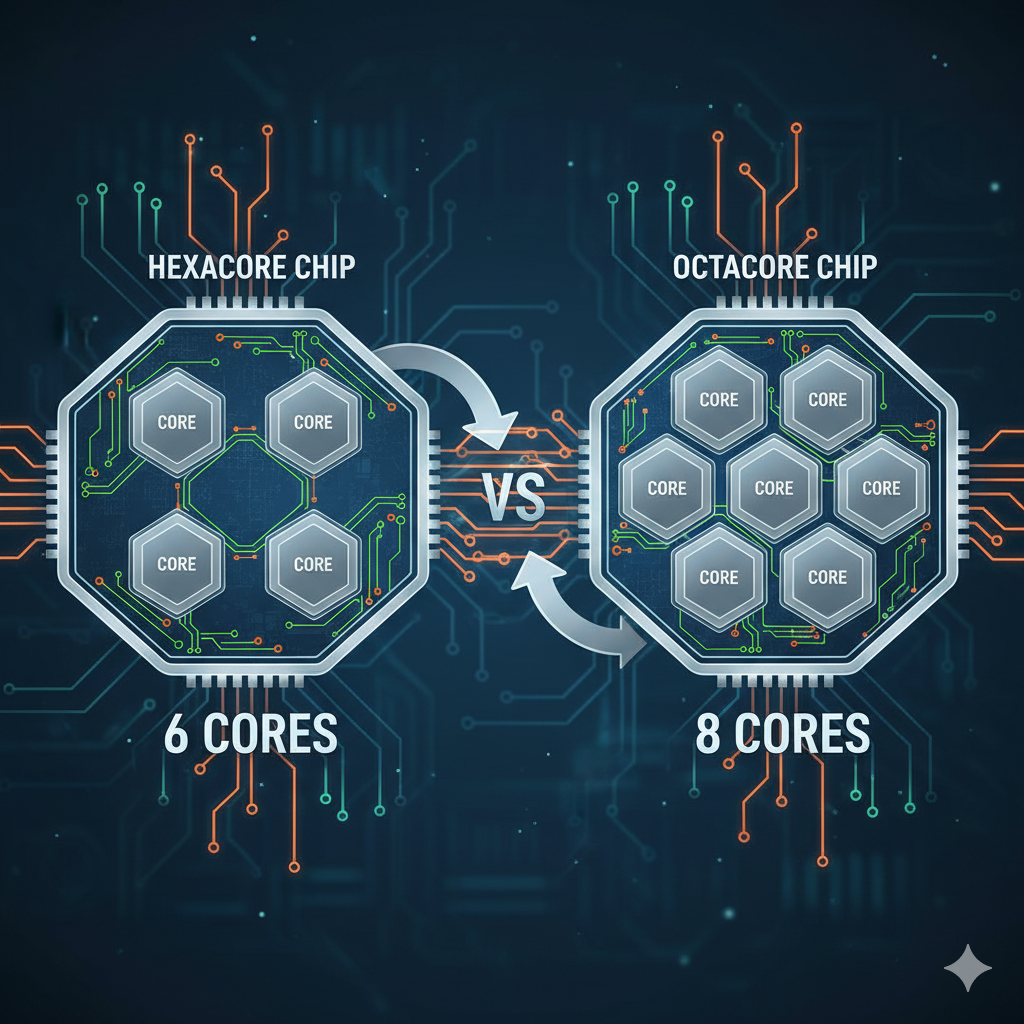
In 2025, processor architectures have continued evolving at pace. But many users still see terms like hexa-core and octa-core, and wonder: Which is better? Which should I pick—for mobile, desktop, or other devices? In this article, we’ll go deep into understanding what these terms mean, how they affect performance and power usage, and show up-to-date comparison data. By the end you’ll be able to decide what’s optimal for your needs.
What Are CPU Cores?
To start, a core is an independent processing unit inside a CPU (Central Processing Unit). Each core can run its own thread of instructions. More cores allow more tasks to be processed in parallel, which helps with multitasking, complex computations, or multi-threaded workloads (like video rendering, large spreadsheets, gaming with physics, etc.).
However, cores are not everything. Other critical factors include:
- Clock speed (GHz)
- Core architecture (how powerful or efficient each core design is)
- Thermal and power constraints
- Cache sizes
- Manufacturing process node (e.g., 4nm, 3nm, etc.)
So when comparing hexa-core to octa-core, you need to consider more than just “6 vs 8”.
What Is a Hexa-Core Processor?
A Hexa-Core processor means the CPU has six cores – each core is capable of executing instructions independently. These cores can work together on one intensive task (like gaming or rendering) or separately on different tasks (like browsing, streaming, and running background applications).
Usage: Common in mid-range mobile phones, laptops, sometimes desktops – specially where a balance between performance and energy/power consumption is needed.
Strengths:
- Lower cost compared to higher-core count chips.
- Generally more power efficient for light to moderate tasks.
- Less thermal output, so devices can often be thinner or simpler cooling.
Weaknesses:
- Under heavier multitasking or demanding workloads, a 6-core chip can lag behind comparable octa-core or higher core chips.
- May bottleneck in multi-threaded professional applications.
What Is an Octa-Core Processor?
An Octa-Core Processor is a CPU (Central Processing Unit) that contains eight independent cores inside a single chip. Each core is a separate processing unit capable of executing tasks on its own — meaning the CPU can handle multiple operations simultaneously for smoother performance, faster multitasking, and improved power efficiency.
Usage: Flagship mobile SoCs, gaming phones, high-end tablets, desktops/laptops that cater to demanding applications.
Strengths:
- Better for multitasking, gaming, video editing, 3D modeling.
- Higher throughput on multi-threaded workloads.
- Flagship SoCs in 2025 (e.g. Snapdragon 8 Elite, Dimensity 9300/9400, etc.) show that octa-core designs are pushing the boundary of performance.
- Weaknesses:
- More power consumption when all cores are active.
- More heat production; cooling or throttling can affect sustained performance.
- Higher cost; more complex manufacturing and often using advanced process nodes to mitigate power/heat issues.
Key Differences: Octa-Core vs Hexa-Core
Here’s a table summarizing the typical differences, followed by explanation.
| Feature | Hexa-Core Processor | Octa-Core Processor |
|---|---|---|
| Number of cores | 6 | 8 |
| Peak multi-threaded performance (raw) | Moderate to high | Generally higher |
| Power efficiency for light tasks | Better (fewer cores to power) | Slightly less efficient if extra cores are active or unused but idle-leak still matters |
| Cost | More affordable | Higher price tier |
| Thermal output under load | Lower | Higher; may need better cooling or throttling mechanisms |
| Typical device targets | Mid-range phones, thin-and-light laptops, budget / mainstream desktops | Flagship phones, gaming rigs, high-performance laptops/desktops |
| Best at | Everyday tasks, moderate multitasking, battery focused usage | Intense workloads, gaming, content creation, heavy multitasking |
Explaining the Table
From the table you can see that hexacore models tend to “win” when it comes to cost, efficiency, and lighter usage. For example, in a mobile device where you’re mostly browsing, chatting, streaming video, fewer cores (but efficient ones) can keep battery life high.
Octa-core processors tend to win in raw compute capability especially in multi-threaded scenarios—video encoding, 3D rendering, multitasking with heavy apps. But keep in mind: if the extra cores are idle (not being used), they might still add some overhead (leakage or idle power), though modern SoCs try to mitigate that.
Which Is Faster: Octa-Core or Hexa-Core?
While “faster” depends on many variables, here are general observations for 2025 based on benchmarks and real-world usage:
Power/performance trade-off: Octa-core often draws more power under load, but modern designs use big.LITTLE or performance/efficiency core mixtures to optimize. So-called “efficiency cores” can reduce power consumption when full power isn’t needed.
Single-threaded tasks (launching apps, simple UI interactions) rely more on the speed of individual cores and architecture rather than core count. A high-quality core in a hexa-core chip can match or even beat less efficient cores in some octa-core designs.
Multi-threaded tasks (rendering, encoding, complex gaming physics, large spreadsheets) benefit substantially from more cores. Octa-core chips often have 30-70 % better multi-core benchmark scores than hexa-core counterparts in comparable process node and architecture classes.
Sustained performance depends on thermal design. If an octa-core processor throttles heavily under load due to insufficient cooling, its performance could drop below expectations; in such a case, a well-designed hexa-core chip might maintain more consistent performance over time in constrained devices.
Real-World Performance Comparison (2025 Update)
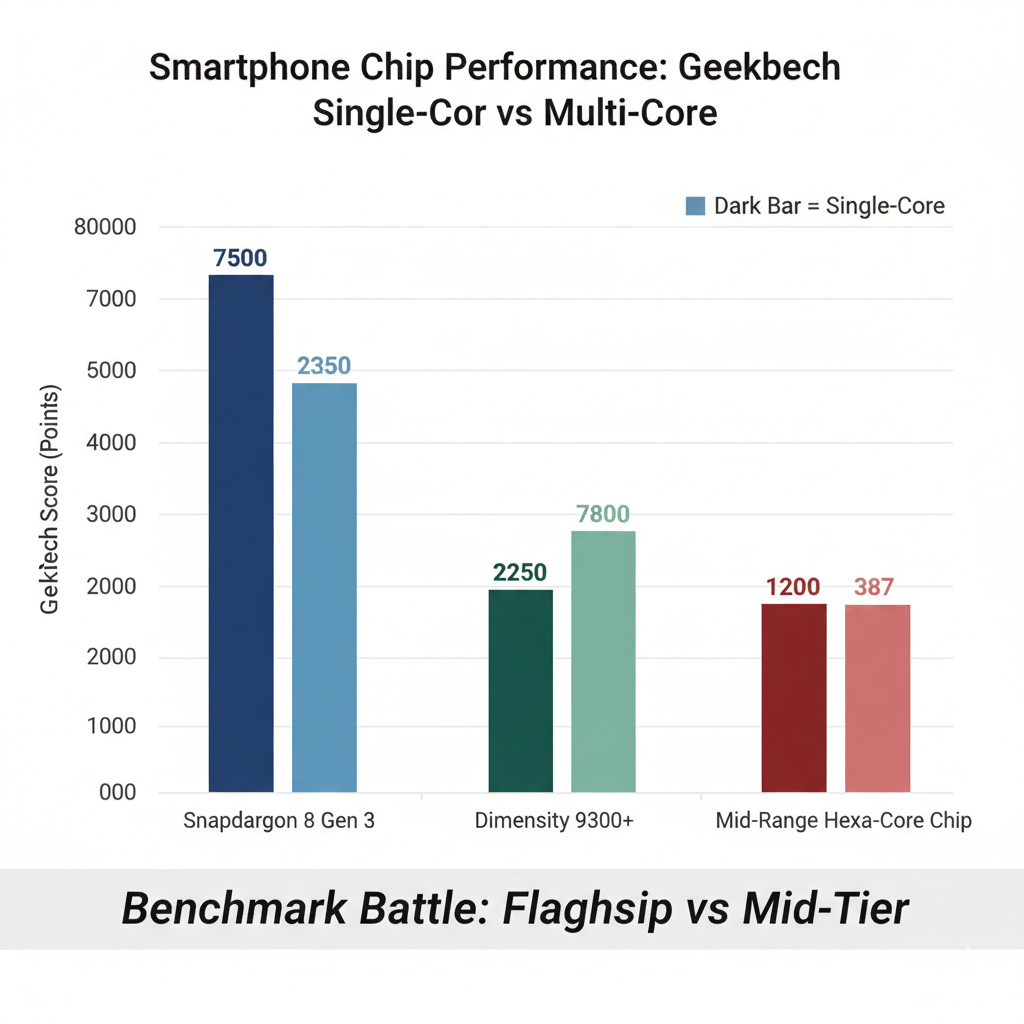
Here’s a comparison of some top processors from mobiles/devices in 2025. Note that many of these are octa-core chips; hexa-core is now more common in mid or upper-mid tiers.
| Device Type | Processor/SoC | Number of Cores / Core Mix | Benchmark Data (Single / Multi-Core) | Verdict |
|---|---|---|---|---|
| Flagship Mobile | Qualcomm Snapdragon 8 Elite | Octa-core (2 P-cores + 6 E-cores) | ~3,093 (single) / ~9,854 (multi) in Geekbench (2025) | One of the fastest mobile chips; excellent multitasking & gaming. |
| Upper-Mid Mobile | MediaTek Dimensity 9300 Plus | Octa-core | ~2,302 / ~7,547 (Geekbench) and AnTuTu ~2,110,000+ | Very strong performance; somewhat less expensive; still power hungry under load. |
| Mid-Range Mobile | Snapdragon 7+, various 6-core or hybrid core mixes | Hexa-core or mixed (6 “big” or “mid” cores) | Moderate multi-core scores; less headroom for gaming or heavy multitasking | Good value for average users; battery life tends to be better. |
| Desktop / Laptop | Comparable hexa-core vs octa-core CPUs (e.g., Ryzen 5 / Ryzen 7) | 6 vs 8 cores with higher TDP / thermal envelope | Octa-core CPUs deliver significantly higher multi-threaded performance (video editing, compiling, etc.) while single-thread differences are smaller | For desktop, octa-core is generally the better pick if budget and thermal constraints allow. |
Which Processors in 2025 Exemplify These Differences?
- The Qualcomm Snapdragon 8 Elite is among the top mobile SoCs in 2025, leading in benchmarks. It uses an octa-core layout with a mix of performance and efficient cores.
- The MediaTek Dimensity 9300 Plus is another strong octa-core example; for many users it offers flagship-like performance at slightly lower prices.
- In many mid-range phones, SoCs with hexa-core or equivalent core counts are more common because of efficiency and cost trade-offs. These are perfectly adequate for daily tasks, moderate gaming, video streaming, etc.
Octa-Core vs Hexa-Core: Mobile vs Desktop vs Other Devices
Let’s split by device type to see where octa-core or hexa-core makes more sense.
Mobile Devices (Phones / Tablets)
| Scenario | Which Core Setup Helps More | Why |
|---|---|---|
| High-end gaming, 60-120 FPS, heavy graphics | Octa-core with high performance cores and good GPU | Because rendering demand is high, many cores and high clocks help. |
| Balanced users (social media, video, occasional games) | Hexa-core or mixed octa-core with emphasis on efficiency | Helps battery life; fewer cores active when not needed. |
| Long battery life priority | Efficiency cores, fewer high-power cores; sometimes hexa-core architectures | Less heat, lower power draw. |
Laptops / Desktops
- Desktop / Gaming PC: Thermal and power budget are higher, so octa-core (or more) gives clear advantages for multi-threaded tasks.
- Ultrabooks / Light Laptops: Often use fewer powerful cores plus efficiency cores; here, a well-designed hexa-core chip can sometimes outperform a poorly cooled octa-core in sustained workloads, because throttling hurts performance.
Other Smart Devices (Wearables, IoT, Embedded)
- Usually neither hexa-core nor octa-core are used; fewer cores with high efficiency are preferred.
- For example, smart watches or lightweight sensors prioritize low power, low heat.
Benchmark Data: Numbers That Tell the Story
Below is a table summarizing benchmark data of several current chips (2025) to illustrate how octa-core chips generally outpace hexa-core ones, especially in multi-core metrics.
| Processor / SoC | Core Count / Mix (Perf vs Efficiency) | Geekbench Single-Core Score | Geekbench Multi-Core Score | AnTuTu / Other Benchmarks | Power / Efficiency Notes |
|---|---|---|---|---|---|
| Snapdragon 8 Elite | Octa-core (2 P + 6 E cores) | ~3,093 | ~9,854 | AnTuTu top scores in ranking list | High power draw under load; top price. |
| Dimensity 9300 Plus | Octa-core | ~2,302 / ~7,547 | Same | Near flagship performance in cost/performance | Slightly better power/per dollar. |
| Mid-tier Hexa/Hybrid core chips | Often 6 “big” or “mid” cores + efficiency cores | Lower single core scores, perhaps ~1,800-2,200 range depending on chip | Lower multi-core than flagship octa; depends on core mix | Lower AnTuTu / synthetic scores; better battery efficiency often | Lower TDP; better sustained performance in lighter usage. |
Trade-Offs to Consider
Thermals & Throttling: Octa-core chips generate more heat under heavy load. If the device design is thin or cooling is subpar, performance might drop sharply after some time. Hexa-core chips often sustain performance better in constrained enclosures.
Battery Life: More cores = more potential power draw, but efficient core designs + power management help. For many users, hexa-core or octa-core with efficiency cores gives acceptable battery life.
Cost vs Benefit: High core count chips cost more, often with premium pricing. If you don’t need the extra performance (gaming, content creation, future-proofing), a lower-core or hexa-core chip can offer better value.
Software Optimization: Apps need to use multi-threading well; if most of your apps don’t, extra cores may go underused.
Longevity & Resale: Higher performance chips may have longer useful life (can handle more intensive apps in future), but also might age faster due to heat and power stress.
Final Verdict: Which Should You Choose in 2025?
Here’s a practical guide, depending on your use case:
| If You Are… | Go With… | Because… |
|---|---|---|
| Mobile gamer / content creator / power user | Octa-core flagship SoC | You need high performance, multi-threaded capability, top graphics. |
| Everyday user (social apps, video streaming, occasional light gaming) | Hexa-core or efficiency-focused octa-core | Better cost-performance ratio, more battery-friendly, adequate speed. |
| Working on laptop / desktop for video editing, programming, rendering | Octa-core (or higher) chips, good cooling | Helps reduce render times, faster compiling etc. |
| Need long battery life (mobile, tablet) | A chip with fewer high-power cores, strong efficiency cores, good power management (could be hexa-core-oriented) | Less heat, more uptime. |
| Value buyer / budget market | Don’t overspend on high core count unless needed—hexa-core or mid-octa-core may suffice | Get best performance per rupee/dollar. |
Summary
Octa-core and hexa-core refer to the number of cores in a CPU: 8 vs 6. More cores generally mean better performance, especially for multi-threaded workloads.
But core count is just part of the story. Architecture, clock speed, process node, thermal design & software optimization all hugely matter.
In 2025, octa-core SoCs dominate flagship markets. They provide excellent speed in mobiles and desktops, particularly when workloads are heavy.
Hexa-core or hybrid core designs are still highly relevant—especially for cost-efficiency, battery life, and lighter users.
As a rule of thumb: If you regularly push your device (gaming, video editing, multitasking), invest in octa-core. If your use is moderate, a well-designed hexa-core or efficient core chip may give you better overall value.