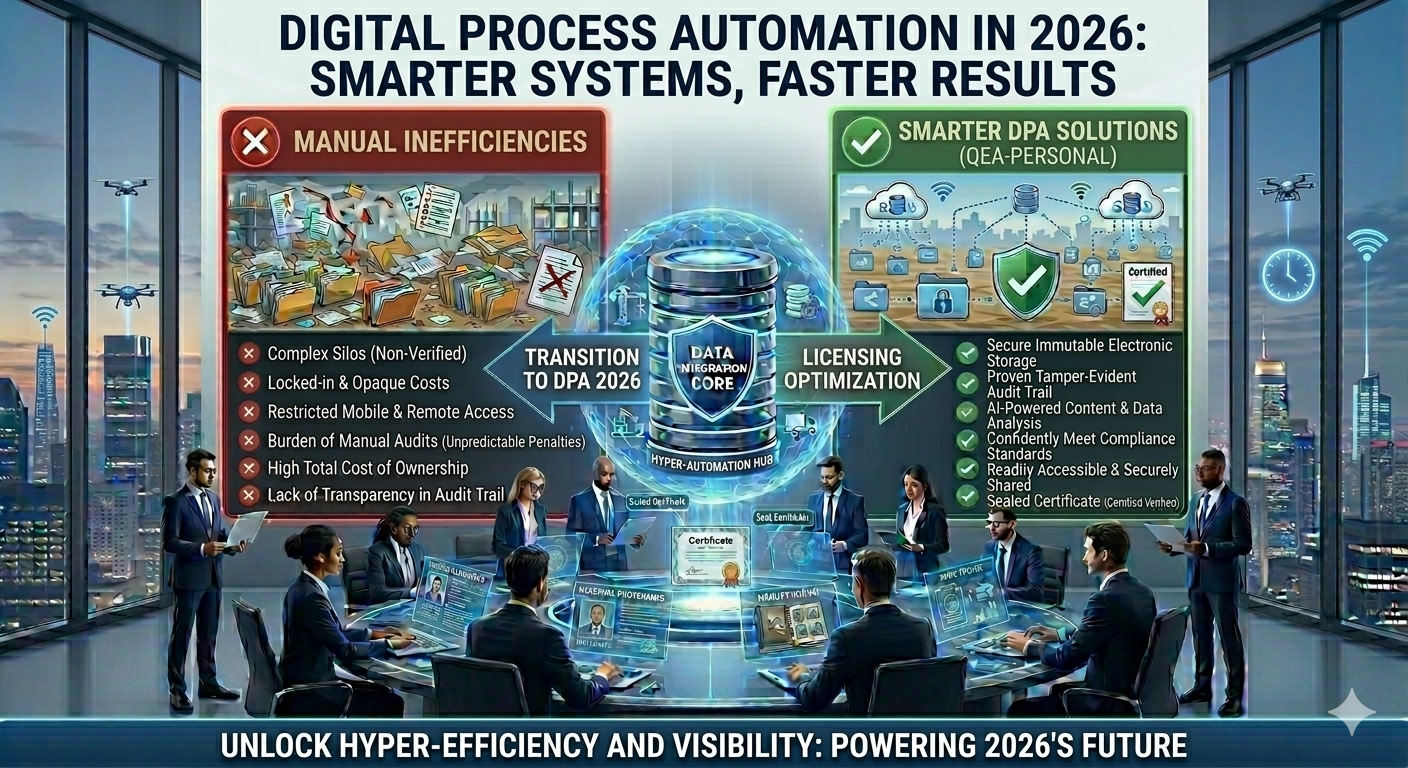
As we approach 2026, businesses are facing increased pressure to remain agile, efficient, and cost-effective in an ever-evolving market. Digital Process Automation (DPA) has already proven itself as a key driver of operational efficiency, but in 2026, it will go beyond just streamlining workflows and automating tasks. The future of DPA lies in smarter systems that leverage advanced technologies like artificial intelligence (AI), machine learning, and data analytics to deliver faster, more accurate results.
In this blog, we will explore how Digital Process Automation is evolving in 2026, the technologies shaping its future, and why organizations must embrace these innovations to stay competitive and achieve operational excellence.
The Rise of Smarter Systems in Digital Process Automation
In 2026, Digital Process Automation will not be limited to simple task automation or basic workflow management. Instead, it will incorporate advanced cognitive technologies that allow businesses to improve decision-making, predict outcomes, and respond dynamically to changes in their environments.
1. AI and Machine Learning Integration
AI and machine learning are already being used in various industries to enhance processes, but in 2026, their integration with Digital Process Automation will be far more sophisticated. Machine learning algorithms will analyze vast amounts of data generated by business operations to identify patterns, optimize workflows, and predict future trends.
For example, in customer service, AI-powered chatbots integrated with DPA systems will not only automate routine queries but also learn from previous interactions to provide more personalized and intelligent responses. Similarly, machine learning can be used to analyze invoices, detect discrepancies, and suggest corrective actions in real-time, reducing the need for manual intervention and speeding up financial processes.
2. Intelligent Document Processing (IDP)
Intelligent Document Processing, a subset of AI, is rapidly transforming how businesses manage documents. In 2026, DPA will incorporate more advanced IDP capabilities to automatically extract, categorize, and process data from various document formats. This will significantly improve accuracy and speed, reducing the time spent on manual data entry.
For instance, IDP combined with Digital Process Automation will enable systems to scan incoming invoices, contracts, and forms, automatically extract relevant data, validate it against existing systems, and route it to the appropriate team or department for action. This shift will not only enhance efficiency but also help reduce human error, ensuring that documents are processed accurately and quickly.
3. Robotic Process Automation (RPA) and AI Collaboration
While Robotic Process Automation (RPA) has already been an integral part of many DPA systems, the combination of RPA with AI will take automation to a new level. In 2026, Digital Process Automation will use AI to guide RPA bots, making them smarter and more adaptable to changing business conditions.
For example, RPA bots could handle repetitive tasks like data entry or report generation, while AI systems analyze trends and suggest improvements or optimizations to the process. The synergy between RPA and AI will allow businesses to automate more complex processes, enhance decision-making, and improve overall productivity.
4. Hyperautomation and End-to-End Automation
In 2026, Digital Process Automation will evolve into hyperautomation an advanced stage of automation where organizations will automate not only individual tasks but entire end-to-end processes. Hyperautomation is the idea of automating every aspect of a business’s operations, from the customer experience to back-office functions.
Imagine a company where everything, from order intake to delivery and post-purchase follow-up, is automated using DPA. Hyperautomation, powered by Digital Process Automation, will allow businesses to seamlessly connect various systems, departments, and data sources to create a more cohesive and efficient workflow. It will be able to adapt to changes, handle complex decision-making, and ensure that all processes are synchronized across the organization.
Why Faster Results Will Be Key in 2026
In 2026, businesses will face the demand for faster results more than ever before. Customers expect quicker response times, supply chains need to be more agile, and decision-making must be increasingly data-driven and rapid. Digital Process Automation plays a crucial role in meeting these demands.
1. Real-Time Data Processing
In 2026, Digital Process Automation will be designed to handle real-time data processing, providing businesses with immediate insights into operations. Businesses can expect faster decision-making capabilities, where processes will adapt to real-time data inputs without manual intervention.
For instance, in a supply chain environment, Digital Process Automation can track inventory levels in real time and automatically trigger purchase orders or shipments when stock levels fall below a predefined threshold. This will reduce the risk of stockouts, improve customer satisfaction, and optimize inventory management.
2. Faster Customer Service and Support
In the digital age, customers expect businesses to be responsive 24/7. Digital Process Automation will enable businesses to provide faster customer service and support by automating routine inquiries, escalating more complex issues to human agents, and tracking customer interactions across multiple channels.
AI-powered chatbots, integrated with Digital Process Automation, will not only assist customers with FAQs but also handle transactional tasks, such as processing refunds or providing order updates, in a fraction of the time it would take a human representative. This speed will improve customer satisfaction and reduce operational costs.
3. Optimized Operational Speed
Businesses are under constant pressure to improve efficiency and reduce operational costs. Digital Process Automation will allow companies to optimize their operational speed by automating repetitive tasks, streamlining workflows, and enabling real-time adjustments. This will lead to faster processing times and the ability to scale operations without hiring additional employees.
For example, automating the employee onboarding process can reduce the time it takes to bring new hires up to speed. Instead of manually inputting personal information, scheduling training sessions, and preparing documentation, a Digital Process Automation system can handle all of these tasks, allowing HR teams to focus on higher-value activities.
The Future of Digital Process Automation: Embrace Smarter Systems
As we move toward 2026, Digital Process Automation will continue to evolve and become more intelligent, faster, and more adaptable. Businesses that adopt these technologies will be able to reduce manual tasks, optimize workflows, and stay competitive in a rapidly changing market. The integration of AI, machine learning, and advanced analytics into Digital Process Automation will empower organizations to operate more efficiently and deliver faster results while providing a higher level of service to customers.
For businesses looking to stay ahead of the curve, embracing Digital Process Automation will be a critical strategy for success in 2026 and beyond. By automating processes, enhancing decision-making, and improving operational speed, companies can navigate the challenges of the future with greater agility and confidence.
Conclusion
The future of Digital Process Automation in 2026 promises smarter systems and faster results, driven by AI, machine learning, and advanced automation technologies. Organizations that invest in Digital Process Automation today will position themselves to thrive in an increasingly competitive, data-driven world. Whether it’s optimizing workflows, improving customer service, or increasing operational efficiency, Digital Process Automation will be a key enabler of business success in the years to come.