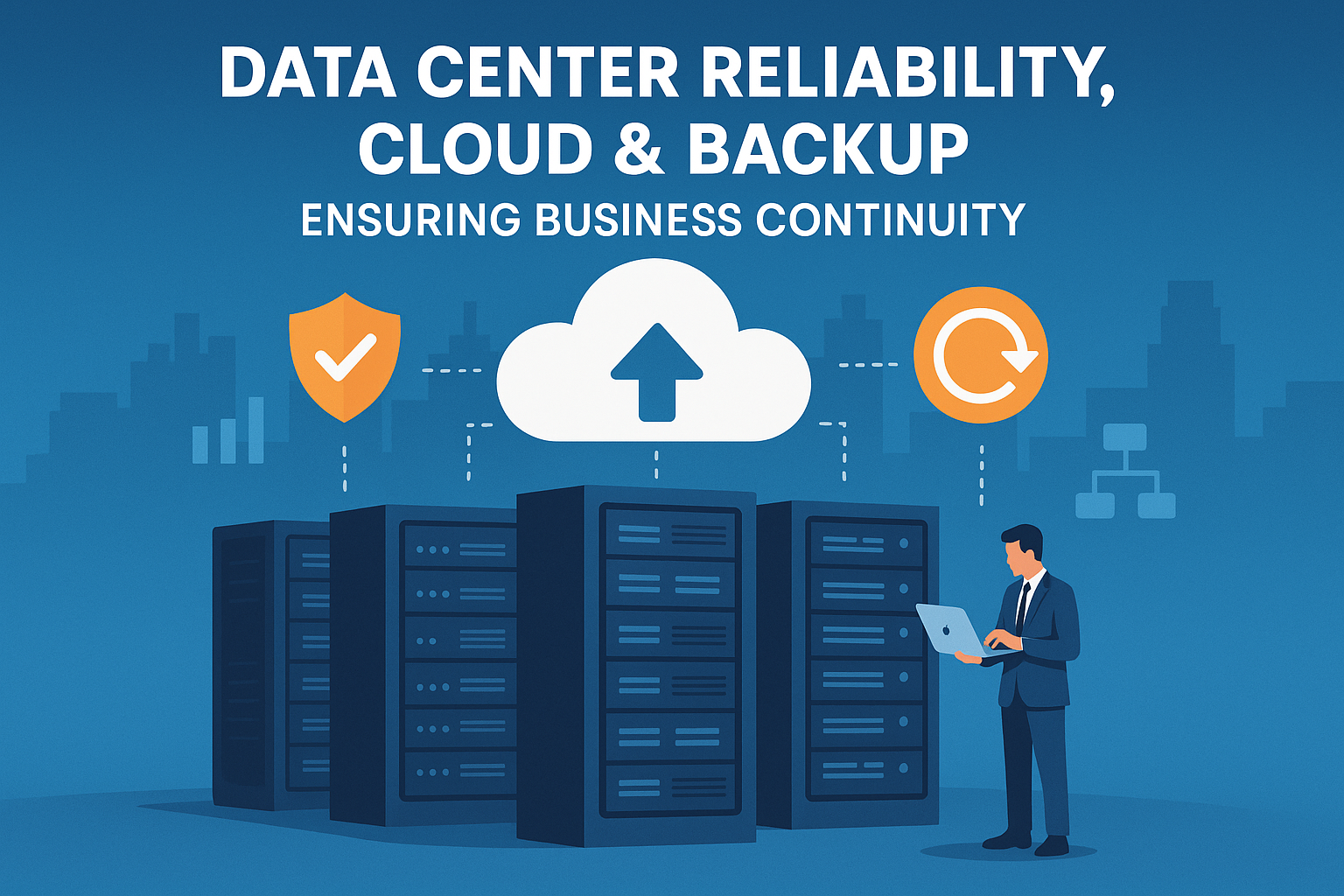
In 2025, businesses still face threats like natural disasters, cyberattacks, and terror strikes that can cause prolonged downtime. Even a single day offline may cost organizations millions. Traditional power backup systems and human intervention no longer suffice. Cloud hosting, robust data center redundancies, and automated backup procedures are essential pillars in any modern business continuity plan.
In this post we’ll explore best practices around data center resilience, backup strategies, cloud storage, and remote accessibility to minimize downtime and protect revenue.
Why Cloud Hosting and Data Center Storage Matter for Business Continuity
Cloud hosting plays a critical role in ensuring uptime and scaling capacity under stress. According to Gartner, worldwide public cloud end‑user spending is projected to rise from $675.4 billion in 2024 to $723.4 billion in 2025, a growth of ~21.5% driven by AI, IaaS and hybrid models. In parallel, IDC expects “whole‑cloud” spending to reach **$1.3 trillion by 2025”.
Hybrid cloud adoption is increasingly common—Gartner forecasts that 90% of organizations will have hybrid cloud strategies by 2027, enabling businesses to combine public cloud flexibility with on‑prem or co‑located data center resilience.
Well‑engineered data centers also optimize power usage effectiveness (PUE). Average PUE in the U.S. data centers is around 2.0, whereas top‑tier centers achieve 1.2 or lower, significantly reducing wasted energy on cooling and overhead.
The True Cost of Downtime: Data Center Outages & Backup Preparedness
According to Uptime Institute’s 2024 outage analysis, 54% of respondents said their most recent serious or severe outage cost over $100,000, and 20% said it exceeded $1 million. Power issues remain the leading cause of impactful downtime, followed by network and human‑error related configurations issues.
As Veeam reported in 2019, companies typically experience 5–10 unplanned downtimes per year, with average cost per hour ~$102,450. In highly automated or digital‑heavy operations, some outages may lead to revenue losses of $500,000 per hour or more.
Best Practices for Backup, Cloud Hosting and Business Continuity
1. Choose Redundant and Tiered Data Centers
Select data center facilities with high availability ratings (e.g. Tier III or IV) and SLA-backed uptime (99.9% or higher). Note that 99.9% uptime allows ~8.77 hours of downtime per year, whereas 99.99% drops to ~52 minutes/year—a meaningful difference for critical workloads.
Locate backups in diverse geographic regions, ideally combining local and remote cloud-based storage for resilience. More than 40% of midsized organizations rely on a single data center, amplifying risk—spread across cloud hosting and remote backup to mitigate disasters.
2. Automate Your Backup and Recovery Processes
Manual recovery often fails during emergencies. Automate full backups in cloud hosting environments (IaaS/PaaS), regularly snapshot data, and define automatic failover. This minimizes human dependency and speeds recovery.
3. Prioritize Mission-Critical Data and Applications
Identify your most vital systems (ERP, customer databases, authentication services, etc.) and ensure they are prioritized in your data storage and recovery strategies. Avoid over‑investing in non‑critical workloads.
4. Test Recovery Plans Regularly
Uptime Institute found over 20% of companies never test their business continuity plans, and many more do so infrequently . You should test recovery strategies at least quarterly, including cloud failover, backup restoration, and remote workforce access.
5. Enable Secure Remote Access
Remote accessibility to servers, applications, and documents is essential during events like power outages or cyberattacks. Cloud hosting platforms offer secure remote access and workspace continuity, ensuring workforce productivity when offices are offline.
Trends in Cloud Hosting, Backup & Data Center Resilience
| Trend / Metric | 2023–2024 Status | 2025 Projection / Trend |
|---|---|---|
| Public cloud spending | ~$675 b in 2024 | ~$723 b in 2025 (+21.5%) |
| Hybrid cloud adoption | ~< 80% | ~90% of orgs by 2027 |
| Cost of serious data center outage | > $100 k (54%), > $1 m (20%) | Rising inflation worsening recovery costs |
| Uptime targets (nines) | Many aim 99.9% (~8.8 h/year) | Increasing shift toward 99.99% or above |
| Backup testing frequency | 20% never tested | Regular quarterly testing recommended |
Expert Insight
“Cloud use cases continue to expand with increasing focus on distributed, hybrid, cloud‑native, and multi‑cloud environments supported by a cross‑cloud framework,” — Sid Nag, Vice President Analyst at Gartner .
This wisdom emphasizes that your architecture must support distributed cloud hosting and data synchronization across platforms to future‑proof business continuity.
How Cloud Hosting, Backup & Data Center Fit Into Your Continuity Strategy
- Data Center: Choose geographically dispersed, Tier‑rated facilities, optimize PUE, and ensure power/network redundancy.
- Backup & Storage: Use automated cloud backups, remote replica, and hybrid storage strategies.
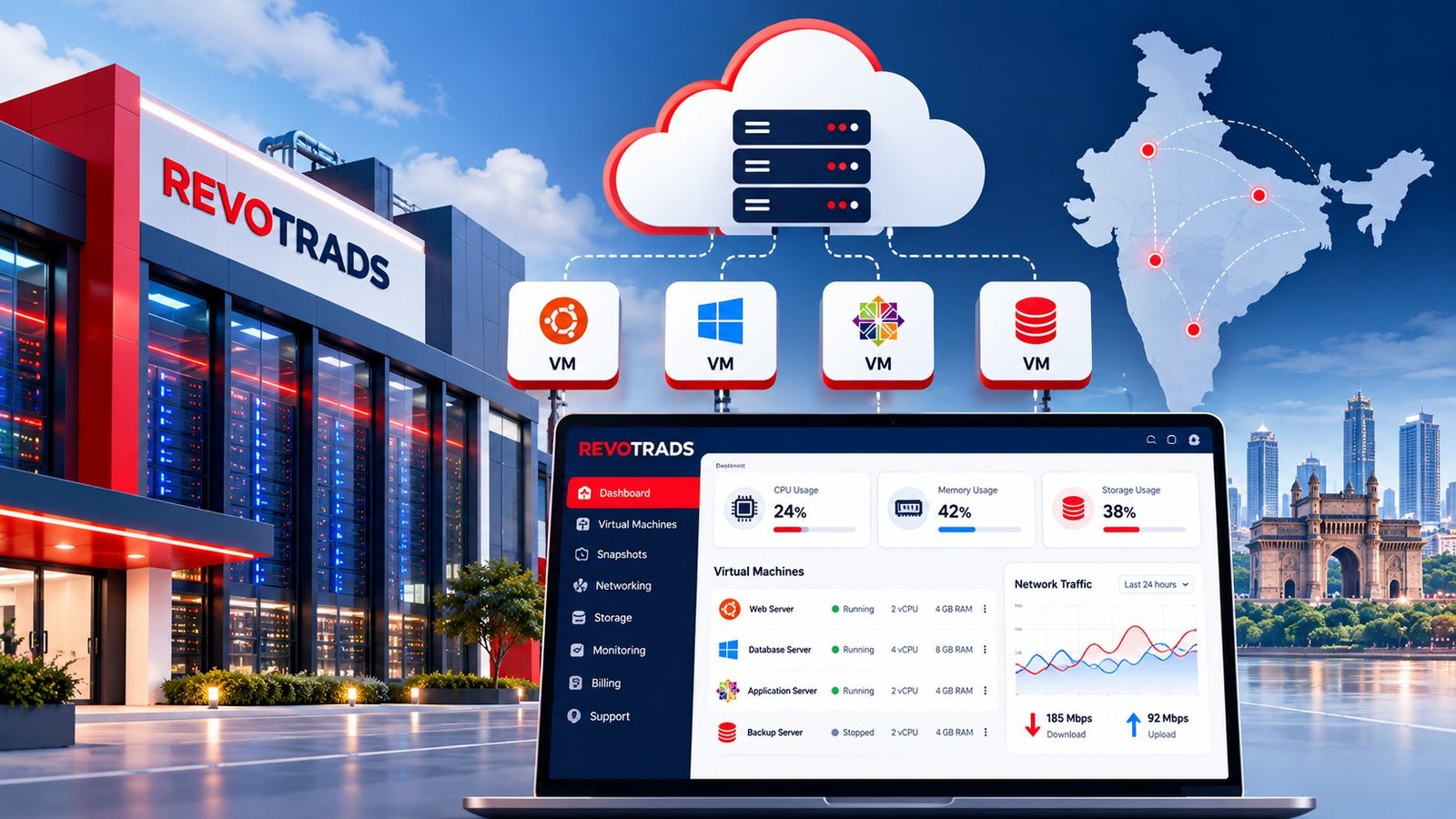
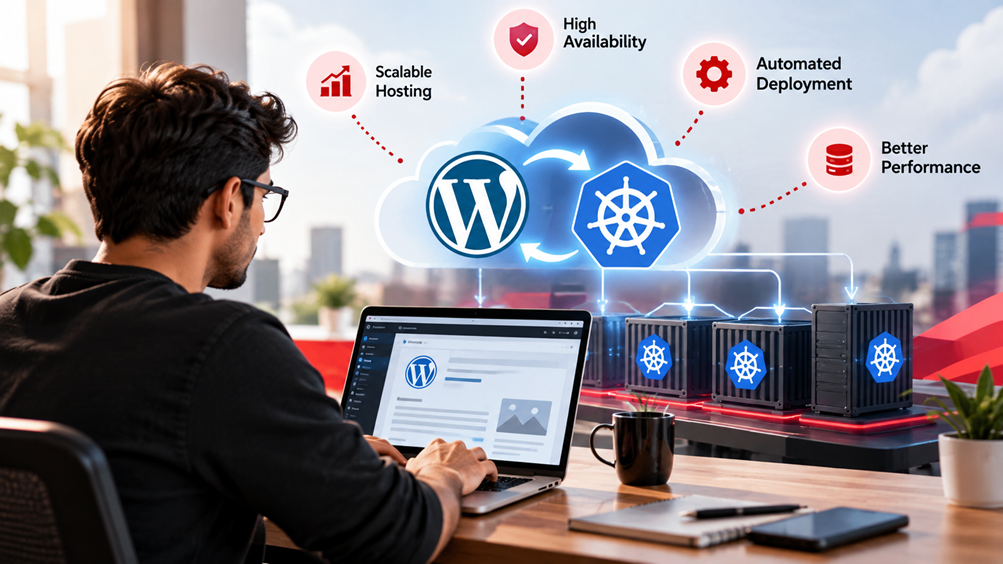
- Cloud Hosting: Leverage scalable public cloud platforms for IaaS/PaaS capabilities; hybrid cloud helps maintain continuous operations.
- Automation & Testing: Automate backup, recovery, and failover; test at least quarterly, involve mission-critical workloads.
- Remote Accessibility: Use secure VPN or cloud‑based access to enable operations from anywhere when local sites fail.
Internal Linking Suggestions
- Link to your “Cloud Hosting Services” page, to highlight your offerings in scalable public cloud environments.
- Link to your “Disaster Recovery & Backup Solutions” blog, providing readers with actionable resources and service details.
Final Thoughts & Call to Action
In today’s high-risk landscape, businesses cannot afford downtime. Cloud hosting, redundant data center design, automated backup and robust testing are no longer optional—they are core to survival. Leveraging the latest insights and spending trends—from billions in cloud investment to mounting outage costs—you can build a business continuity strategy that delivers resilience, recovery, and peace of mind.